What are Kegel exercises?
Kegel exercises are also known as pelvic floor muscle training. They are a series of simple exercises. These exercises are designed to strengthen the pelvic floor muscles. These muscles support critical organs in the pelvis, including the bladder, rectum, and uterus. By performing Kegel exercises, individuals can enhance their ability to control urinary and bowel functions. They can also reduce the risk of involuntary leakage of urine, stool, or gas.
Why should I do Kegel exercises?
There are several reasons to incorporate Kegel exercises into your routine. Weak pelvic floor muscles can result from various factors such as pregnancy and childbirth, aging, surgery, or certain health conditions. Strengthening these muscles through Kegels can help alleviate issues like urinary incontinence (leaking urine) and fecal incontinence (leaking stool). It can also improve sexual function for both men and women. Studies have shown that pelvic floor muscle training can lead to significant improvements in these areas.
How do I perform Kegel exercises?
To effectively perform Kegel exercises, you first need to identify your pelvic floor muscles. Here are some methods to locate them:
- Stopping Urine Flow: While urinating, try to stop the flow of urine midstream. The muscles you engage to do this are your pelvic floor muscles. However, this method should only be used initially for identification purposes. Regularly stopping urine midstream can increase the risk of urinary tract infections.
- Preventing Gas: Imagine trying to prevent yourself from passing gas. The muscles you would use are the same ones you need for Kegels.
- Insertion Method: For women, insert a finger into the vagina. Squeeze around it to help identify the correct muscles if you feel tightness. For men, inserting a finger into the anus and squeezing will serve a similar purpose.
Once you’ve identified your pelvic floor muscles:
- Squeeze: Tighten your pelvic floor muscles and hold for about 3 seconds.
- Relax: Release the squeeze completely and relax for another 3 seconds.
- Repeat: Aim for 10-15 repetitions per session.
It is recommended to perform at least three sets of Kegels each day as part of a regular exercise routine.
Tips for Success:
- Start slowly: If you’re new to Kegels, begin with just a few repetitions at a time.
- Gradually increase: Work up to holding each contraction longer (up to 10 seconds) and increasing repetitions.
- Avoid straining. Make sure that you’re not holding your breath. Do not tighten other muscle groups like your abdomen or thighs while doing Kegels.
- Seek professional guidance. If you’re unsure whether you’re performing them correctly, consult with a healthcare provider. If you experience pain during exercise, consult with a healthcare provider. You should choose a physical therapist specializing in pelvic health.
Signs of Improvement:
Over time, with consistent practice of Kegel exercises, individuals may notice improvements. These include reduced leakage during activities like coughing or sneezing. Enhanced sexual satisfaction may also occur due to better muscle control.
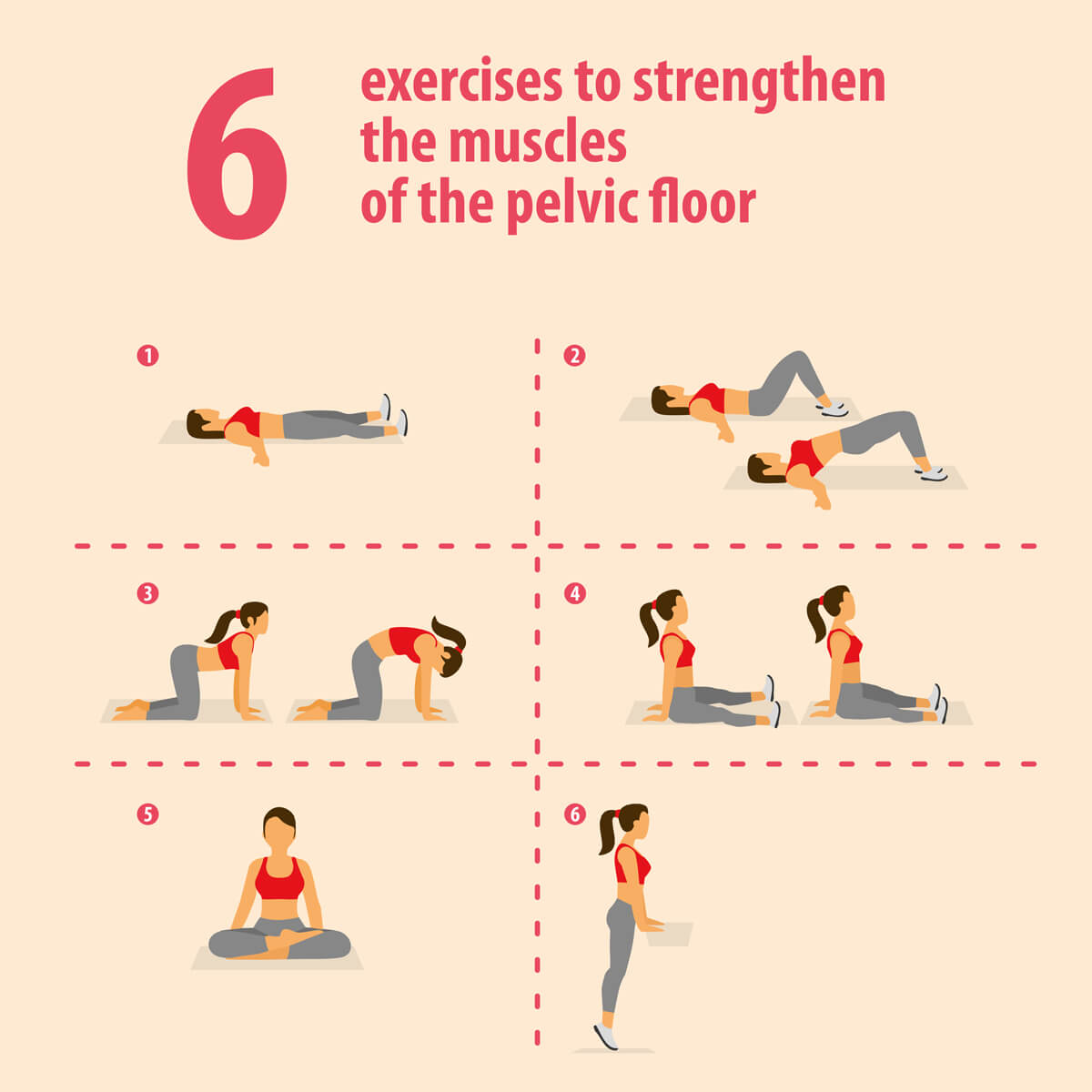
6 Exercises to Strengthen the Muscles of the Pelvic Floor
Strengthening the pelvic floor muscles is essential. It helps maintain overall pelvic health. It also prevents issues such as urinary leakage, pelvic organ prolapse, and chronic pelvic pain. Below are six effective exercises that can help strengthen these important muscles.
1. Breathing Exercises
Breathing exercises are foundational for engaging the pelvic floor. To practice this:
- Lie down on your back. Place one hand on your chest. Put the other hand on your stomach above your belly button.
- Inhale deeply through your nose, aiming to push your stomach out rather than lifting your chest. This helps promote diaphragmatic breathing, which is crucial for activating the pelvic floor muscles.
2. Pelvic Floor Stretching
Stretching helps relax and open up the pelvic area, which can enhance muscle function. Some effective stretches include:
- Leaning over a counter: Stand facing a counter and lean forward while keeping your feet flat on the ground.
- Butterfly legs: Sit with the soles of your feet together. Gently press down on your knees. This will stretch the inner thighs and pelvis.
- Happy Baby Pose: Lie on your back. Grab the outer edges of your feet. Pull them towards you while keeping your knees bent.
- Child’s Pose: Kneel on the ground, sit back onto your heels, and stretch forward with arms extended in front.
3. Single Straight Leg Raise
This exercise targets both core strength and pelvic floor engagement:
- Lie down on your back next to a doorway with one leg closest to it.
- Keep both arms relaxed by your sides. Lift the leg closest to the door frame straight up towards the ceiling. Make sure to keep it straight. Ensure that other body parts remain grounded throughout this movement.
4. Quick Flick Kegels
Kegel exercises are vital for strengthening pelvic floor muscles:
- Start by lying on the floor with knees bent and feet flat.
- Exhale while pulling in your navel towards your spine. Then, quickly contract and release your pelvic floor muscles (like stopping urine flow). Aim for 10 quick flicks followed by a 10-second rest; repeat for 2–3 sets.
5. Heel Slides
Heel slides engage both core stability and pelvic floor contraction:
- Lie down with knees bent in a neutral position.
- Inhale into your rib cage. Exhale while drawing up the pelvic floor. Slide one heel away from you. Ensure you do not lose connection to your deep core muscles. Return the heel to the start position.
6. Marches (Toe Taps)
This exercise enhances core stability while promoting pelvic floor engagement:
- Begin lying down with knees bent in a neutral position similar to heel slides.
- Inhale deeply. Exhale while drawing up the pelvic floor. Slowly lift one leg into a tabletop position. Lower it back down. Alternate legs without straining your lower back.
Incorporating these exercises into a regular fitness routine can significantly improve pelvic floor strength and ability.
How to Do Kegel Exercises
Explore the benefits of Kegel exercises and learn how to do Kegel exercises to prevent incontinence and strengthen your muscles.
Next Page: Drink This Potent Tonic to Boost Sexual Performance in 2 Minutes
Previous page: This Soft Candy Melt In Your Mouth To Rebuild Your Gums and Teeth
Back to the Main Page: Yummy Costa Rican Tea Melts 6lbs a Week
 How to Earn Money From Home